Source Rotating Adapter Optical Carrier for FTTH, Network, Frames
Compare 30 listings for rotating adapter optical carrier designed for FTTH, network equipment, and fiber distribution frames. Buyers can review specifications like insertion loss, mating durability, and operating temperature to select the right component for their infrastructure projects.
Key considerations
Products List




Comprehensive Sourcing Guide
Strategic Sourcing Guide for Rotating Adapter Optical Carrier Solutions
The global telecommunications infrastructure relies heavily on the precision and reliability of fiber optic interconnects. When procurement teams search for a "rotating adapter optical carrier," they are often addressing the need for flexible, high-density, and durable connection points within complex fiber distribution networks. While the specific terminology "rotating adapter optical carrier" may imply a specialized mechanical assembly, the underlying market reality consists of high-performance fiber optic adapters and connectors designed to facilitate secure, low-loss connections that can withstand environmental stress and frequent mating cycles. This guide provides a disciplined, evidence-based approach to sourcing these critical components, ensuring that buyers align their technical requirements with verified supplier capabilities without relying on unverified marketing claims.
Understanding Technical Specifications and Product Attributes
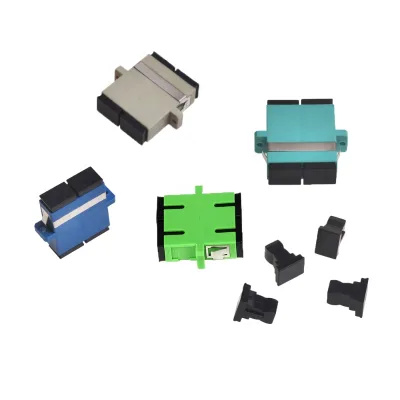
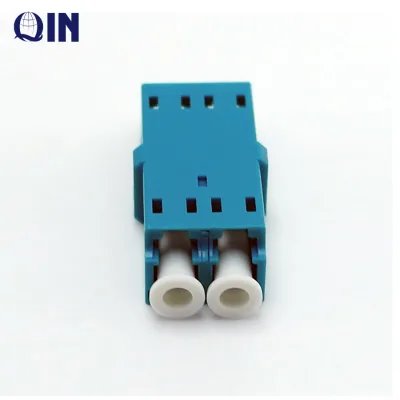
The foundation of any successful procurement strategy lies in a precise understanding of the technical attributes required for the specific application. In the current market, fiber optic adapters are characterized by a distinct set of parameters that dictate their performance and compatibility. Buyers must first identify the connector type, as the market offers various standards including SC, LC, and MU configurations. For instance, specific product listings indicate the availability of SC-type adapters, which are widely used in FTTH (Fiber to the Home) deployments and network equipment. The physical structure of these adapters is equally critical; observations from current product data suggest that square-shaped structures are common, designed to fit standard fiber distribution frames and network equipment racks.
A crucial technical differentiator is the transmission medium and the specific mode of operation. Procurement teams must verify whether the application requires Single-Mode or Multimode transmission. The data indicates that products are available for both Single-Mode APC (Angled Physical Contact) and general single-mode applications. The ferrule endface finish is another vital specification; PC (Physical Contact) and UPC (Ultra Physical Contact) finishes are standard, directly influencing the insertion loss and return loss performance. For high-precision applications, the centring accuracy of the adapter is paramount. Verified product attributes show centring accuracy values around 0.3mm, a specification that ensures the optical fibers are aligned correctly to minimize signal degradation. Furthermore, the mating durability is a key longevity metric, with observed specifications indicating a durability of up to 500 mating cycles, which is essential for environments requiring frequent reconfiguration.
Compliance, Certification, and Regulatory Standards
Navigating the regulatory landscape is non-negotiable for B2B procurement in the telecommunications sector. Buyers must ensure that any supplier of rotating adapter optical carriers or their constituent fiber adapters adheres to international quality and safety standards. The market data highlights that reputable manufacturers often hold certifications such as ISO, RoHS, and CE. These certifications are not merely badges of honor but serve as evidence that the product meets specific environmental, safety, and quality management requirements. For example, RoHS compliance ensures that the materials used in the adapter housing and ferrule are free from hazardous substances, which is a legal requirement in many global markets.
In addition to product-level certifications, the manufacturing process itself should be scrutinized. The fabrication process for these adapters is typically moulded, a method that ensures consistency in the geometric dimensions of the connector body. Buyers should verify that the supplier's production facilities adhere to standard quality management systems, such as ISO 9001:2015, even if this specific standard is not explicitly listed on every product page. The presence of third-party verification standards, such as SGS, further validates the quality of the raw materials and the final assembly. It is important to note that while some listings mention specific standards like "Simplex" or "12~72 cores" for related modules, the adapter itself must be evaluated against the specific standard required for the network topology, whether it be simplex or multi-core configurations.
Cost Drivers and Pricing Dynamics
The pricing of fiber optic adapters and carriers is influenced by a complex interplay of factors, including material costs, manufacturing complexity, and order volume. The observed price range in the market spans from as low as $0.03 to $105 per unit, a variance that reflects the difference between basic single-core adapters and more complex, high-precision assemblies or bulk packaging solutions. Several key drivers contribute to this fluctuation. First, the connector type and finish play a significant role; SC-APC adapters, which require precise angling and higher precision machining, generally command a higher price point than standard SC-PC variants. Second, the material composition and the presence of specific certifications can increase the base cost.
Order volume is another critical determinant of cost. The Minimum Order Quantity (MOQ) observed in the market ranges from 1 to 1000 units. Buyers purchasing small quantities for prototyping or small-scale deployments may face a higher unit cost but benefit from lower upfront capital expenditure. Conversely, large-scale procurement for FTTH projects can leverage economies of scale, significantly reducing the per-unit cost. Additionally, the packaging method affects the final landed cost. Products packaged in standard export cartons, blister boxes, or wooden cases will have different shipping and handling costs. Buyers should also consider the sample policy; while free samples are often available, the freight cost is typically borne by the buyer, which can impact the initial evaluation budget.
Typical Applications and Deployment Scenarios
The versatility of fiber optic adapters allows them to be deployed across a wide array of telecommunications and networking applications. The primary use case identified in the market is FTTH, where these adapters serve as the critical interface between the service provider's network and the end-user's premises. In this context, the adapter must be robust enough to handle outdoor environmental conditions while maintaining low insertion loss. The operating temperature range of -40°C to 80°C observed in product specifications confirms their suitability for harsh environments, including outdoor cabinets and unheated equipment rooms.
Beyond residential deployments, these components are integral to network equipment and fiber distribution frames (FDF). In data centers and central offices, the high-density nature of SC and MU adapters allows for efficient cable management and space utilization. The "rotating" aspect of the carrier or adapter often facilitates easier cable routing and reduces strain on the fiber, which is crucial in high-density patch panels. The application also extends to fiber modules and general network equipment where the integration of wiring devices is required. Whether the application involves single-core or multi-core transmission, the adapter must ensure a stable connection that supports the specific transmission medium, be it single-mode for long-distance transmission or multimode for shorter, high-bandwidth links.
Supplier Evaluation and Verification Protocols
Selecting the right supplier requires a rigorous evaluation process that goes beyond simple price comparison. Buyers should prioritize suppliers who offer OEM and ODM services, as this indicates a level of manufacturing flexibility and capability to customize products to specific project requirements. The origin of the product is a significant factor; the majority of high-volume fiber optic adapters originate from manufacturing hubs in China, specifically regions like Zhejiang, Jiangsu, and Shenzhen. While these regions are known for their robust supply chains, buyers must verify the specific factory capabilities and quality control measures in place.
When evaluating a supplier, procurement teams should request detailed technical documentation that confirms the product attributes observed in the market, such as centring accuracy, insertion loss, and mating durability. It is essential to verify that the "New" condition of the products is guaranteed and that the warranty period, typically one year, is clearly defined in the contract. The sample lead time is another practical consideration; suppliers offering sample delivery within three days demonstrate efficient logistics and responsiveness. Buyers should also inspect the packaging standards, ensuring that the products are shipped in conditions that prevent damage during transit, such as standard export cartons or wooden cases for bulk orders.
Quality Control and Long-Term Procurement Considerations
Ensuring the long-term reliability of fiber optic infrastructure requires a proactive approach to quality control. The insertion loss of 0.2dB observed in specific product listings serves as a benchmark for high-quality performance, but buyers must establish their own acceptance criteria based on their network design requirements. Regular testing and validation of incoming shipments are essential to verify that the centring accuracy and ferrule endface finish meet the specified standards. The use of integrated wiring devices and the structural integrity of the adapter, such as the square shape or MU structure, must be consistent across all units in a batch.
For long-term procurement, buyers should consider the scalability of their supplier relationship. A supplier capable of handling MOQs up to 1000 units and providing consistent lead times is vital for large-scale projects. The availability of free samples allows for initial testing, but the transition to mass production must be managed carefully to maintain quality consistency. Buyers should also monitor the supply chain for any potential disruptions, particularly given the global nature of the component market. Establishing a clear communication channel with the supplier regarding warranty claims, replacement policies, and technical support will ensure that any issues are resolved promptly, minimizing downtime in the optical network.
Comparative Analysis of Product Configurations
To assist buyers in making informed decisions, the following table summarizes key product configurations and their typical applications based on observed market data. This comparison highlights the diversity of options available and helps in matching the right component to the specific network requirement.
| Feature | Configuration A | Configuration B | Configuration C |
|---|---|---|---|
| Product Type | Fiber Adapter | Fiber Adapter | Fiber Adapter |
| Connector Type | SC | SC-APC | MU |
| Transmission Medium | Single-Mode | Single-Mode APC | Multimode |
| Ferrule Endface | PC (UPC) | PC (UPC) | Standard |
| Centring Accuracy | 0.3mm | 0.3mm | Standard |
| Application | FTTH, Network Equipment | Network Equipment, FDF | Network Equipment, FDF |
| Packing | Standard Export Carton | Blister Box | Export Standard/Wooden Case |
| Warranty | 1 Year | 1 Year | 1 Year |
This comparative view underscores that while the core function remains the same, the specific configuration must align with the network's transmission medium and physical layout requirements. Buyers should use this framework to validate supplier offerings against their technical specifications before finalizing any procurement contract. By adhering to these evidence-based guidelines, organizations can secure high-quality rotating adapter optical carriers that ensure the stability and efficiency of their fiber optic networks.
FAQs
What is the centring accuracy for these fiber adapters?
The centring accuracy is 0.3mm for verified products. This precision ensures proper alignment of optical fibers to minimize signal degradation during operation in FTTH and network equipment applications.
Can I get free samples for testing before bulk orders?
Free samples are available for evaluation purposes. However, the buyer must pay the freight charges required to ship the samples, which typically arrive within three days of the request.
Which certifications do these optical adapters typically hold?
Reputable listings often include ISO, RoHS, and CE certifications. These standards verify compliance with environmental safety rules and quality management systems for the manufacturing process.
How many mating cycles can the adapter withstand?
The mating durability is specified as 500 times for standard units. This ensures the connection remains stable and functional through repeated plugging and unplugging in network environments.
What is the typical insertion loss for single-mode adapters?
The insertion loss is observed at 0.2dB for specific models. This low loss value indicates high efficiency in signal transmission for single-mode applications in fiber distribution frames.
Which connector types are available for this product line?
SC and MU connector types are available in the current inventory. These configurations support various network topologies including simplex and multi-core setups for different transmission mediums.
Can suppliers provide OEM and ODM customization services?
Yes, OEM and ODM services are available for qualified buyers. This allows customization of the product to meet specific project requirements while maintaining the standard export packaging.